
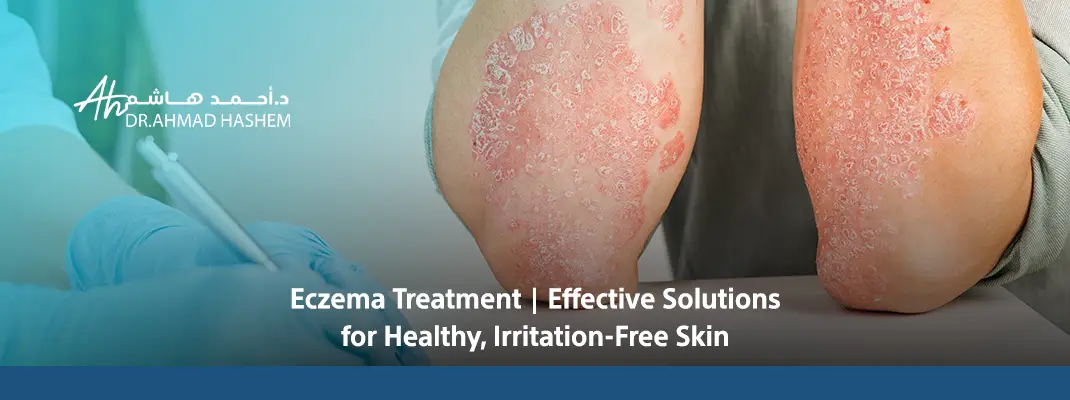

Eczema is a common skin condition that affects individuals of all ages. It arises from inflammation within the skin and often appears as dryness, redness and persistent itching. While it may seem like a simple rash at first, skin eczema can vary widely in form and severity, depending on the type and underlying cause.
In this guide, we’ll walk you through the different types of eczema, their symptoms and causes, effective eczema treatment options and why Dr. Ahmad Hashem’s clinic is a trusted destination for diagnosing and treating all forms of eczema, including children’s eczema.
Table of Contents
What Are the Main Eczema Types?
- Atopic Dermatitis
- Contact Dermatitis
- Dyshidrotic Eczema
- Nummular Eczema
- Seborrheic Dermatitis
- Stasis Dermatitis
Causes and Triggers of Eczema Flare-Ups
The causes of eczema are often a combination of genetic and environmental factors. One of the most important aspects of managing eczema is understanding what triggers flare-ups in the first place.
The first signs of eczema such as dry skin, itchiness, and red rashes are usually a signal that your skin has come into contact with an environmental trigger. These triggers can vary from person to person but the most common include:
-
Irritants
Soaps, detergents, fragrances and cleaning products can damage the skin barrier and cause irritation.
-
Allergens
Pollen, dust mites, mold, pet dander and certain foods can act as allergens and provoke flare-ups.
-
Weather changes
Cold, dry air or sudden shifts in humidity can lead to skin dryness and exacerbate symptoms.
-
Stress
Emotional stress has been linked to increased skin inflammation and more frequent eczema episodes.
-
Sweating and heat
Excessive sweating or overheating can worsen itching and discomfort.
-
Fabric and clothing
Rough materials like wool or synthetic fabrics may irritate the skin and provoke flare-ups.
-
Hormonal changes
Eczema may worsen during certain phases of the menstrual cycle or pregnancy.
Read More: Birthmark Laser Treatment: A Clearer Path to Confident Skin

Symptoms of Eczema
- Dry skin One of the earliest and most persistent symptoms.
- Itchy skin Often intense and worse at night, leading to scratching that may break the skin.
- Red or inflamed patches that may appear anywhere on the body, especially in skin folds.
- Small raised bumps sometimes filled with fluid may develop and ooze when scratched.
- Repeated scratching can cause the skin to become thickened and rough over time.
- Flaky, scaly or crusty skin Especially common in chronic eczema, where the skin barrier is compromised.
- Inflamed areas can become puffy and tender, particularly during an active flare-up.

What Is Treatments for Eczema
Managing eczema requires a comprehensive approach that focuses on soothing symptoms, repairing the skin barrier and preventing flare-ups. While eczema types cannot be permanently cured, several proven treatments can help control the condition and significantly improve daily comfort.
- Phototherapy involves using ultraviolet (UVB) light in regular sessions at the clinic. This helps reduce inflammation and allows the skin to return to its natural state.
- Medications like dupilumab (Dupixent) are biologic injections that target the immune system’s response that causes inflammation.
- Laser therapy is sometimes used to help reduce redness or pigmentation left behind after eczema flare-ups.
- Topical corticosteroids are commonly prescribed to reduce inflammation and relieve itching during flare-ups. These creams are effective in calming irritated skin and preventing further damage.
- Keeping the skin hydrated is one of the most important steps in eczema treatment. Regular use of dermatologist-recommended moisturizers helps maintain the skin’s protective barrier and prevents dryness.
- Antihistamines may be suggested for those experiencing intense itching as they help reduce the urge to scratch and allow for better sleep.
- light therapy can offer relief by exposing the skin to controlled ultraviolet light under medical supervision. In more advanced cases, injectable biologic medications such as dupilumab target specific immune responses and have shown great success in reducing symptoms and preventing flare-ups.
- Lifestyle adjustments are also essential. Identifying and avoiding personal triggers like certain soaps, allergens or stress can prevent recurrences and help maintain long-term skin health.
- Treatment for children’s eczema are specially tailored to be gentle, safe and effective often involving mild creams and careful skin care routines.
- Read More: Benefits of Laser Skin Rejuvenation for Anti-Aging

Key Differences: Pediatric vs. Adult Eczema
Children’s eczema typically appears on the cheeks, scalp, arms and legs. In many cases, the skin becomes very dry, itchy and inflamed, which can make children uncomfortable and restless, especially at night. Scratching may cause the affected areas to ooze or become infected, making early and gentle treatment essential.
Children are also more sensitive to triggers such as certain foods, fabrics or environmental allergens, which means their care often includes a combination of skincare routines and allergen management.
Adult eczema tends to be more chronic and may appear in different areas of the body, such as the hands, neck, eyelids and behind the knees. The skin in adults often becomes thicker, more leathery and prone to discoloration due to repeated scratching and inflammation. Stress and hormonal fluctuations are also more common triggers in adult patients. Adults may experience longer-lasting flare-ups and need a more advanced skincare regimen, including prescription medications and lifestyle adjustments, to keep skin eczema under control.
Why Dr. Ahmad Hashem’s Clinic Offers Exceptional Care for Eczema Types?
At Dr. Ahmad Hashem’s clinic, patients receive world-class dermatological care grounded in the latest medical research and delivered with a deeply personalized approach.
his medical team are known for their use of advanced therapies including biologics, light therapy and non-steroidal options combined with practical education on daily skincare, allergen avoidance and long-term prevention strategies. Patients also benefit from follow-up care that ensures lasting results and minimizes the risk of relapse.
Whether you’re dealing with any eczema types for the first time or have been struggling with chronic symptoms for years, Dr. Ahmad Hashem’s clinic offers a trusted path toward clearer, healthier skin.
From the moment you step in, you’ll feel the difference in care that is both compassionate and clinically precise.
If you’re struggling with eczema don’t wait any longer to seek relief. Dr. Ahmad Hashem’s clinic offers personalized, expert care to help you manage and treat your eczema effectively.
Book your consultation today and start your journey towards clearer, itch-free skin.

د.أحمد هاشم
استشاري جلدية وتجميل وليزر وزراعة الشعر وطب ضد الشيخوخة، ومدرب للأطباء على البوتوكس والفيلر والشد بالخيوط